A well-coordinated table setting starts with more than choosing attractive decorations. The way tablecloths, napkins, and centerpieces work together can influence the entire dining experience, whether you're preparing for a family gathering, wedding reception, or special celebration. When these elements complement one another, the table feels thoughtfully arranged without appearing overcrowded.
Learning how to match tablecloths and napkins with the right centerpiece doesn't mean using identical colors or materials. Instead, it's about finding a balance between color, texture, and proportion. With a few practical styling techniques, you can create a cohesive table setting that suits almost any occasion.
Start with the Tablecloth as Your Base
The tablecloth is often the largest visible element of a table setting, making it a natural starting point when planning your color scheme. Its color, texture, and pattern help determine which napkins and centerpieces will work best.
Neutral tablecloths, such as ivory, white, or beige, provide a flexible foundation for colorful napkins and decorative accents. Darker shades like navy, burgundy, or forest green create a stronger visual presence and work well with lighter accessories.
If you're using a solid-colored tablecloth, consider adding one of your chosen table runners in a complementary shade. A runner can introduce another layer of color or texture while helping define the space for your centerpiece.
For patterned tablecloths, keep the remaining elements relatively simple. Choose napkins that pick up one color from the pattern and avoid adding too many competing designs.
Coordinate Napkin Colors and Textures

Napkins may be smaller than tablecloths, but they can make a noticeable difference in how the entire arrangement comes together. The goal is to create enough contrast for each place setting to stand out while maintaining a consistent color palette.
When selecting cloth napkins, consider these three approaches:
-
Tonal matching: Pair different shades of the same color, such as sage green napkins against a deeper olive tablecloth.
-
Soft contrast: Combine ivory tablecloths with dusty blue or muted rose napkins for a subtle distinction.
-
Bold contrast: Use champagne napkins against navy or burgundy linens for a more dramatic appearance.
Texture also contributes to the finished look. For example, matte napkins can soften the appearance of a glossy tablecloth, while a lightly textured fabric can add interest to an otherwise simple arrangement.
Avoid combining several prominent patterns. If the tablecloth already features a detailed print, solid napkins usually provide better visual balance.
Choose Centerpieces That Complement Your Table Linens

Once the tablecloth and napkins are coordinated, the centerpiece should connect the colors and textures already present rather than introduce an entirely different theme.
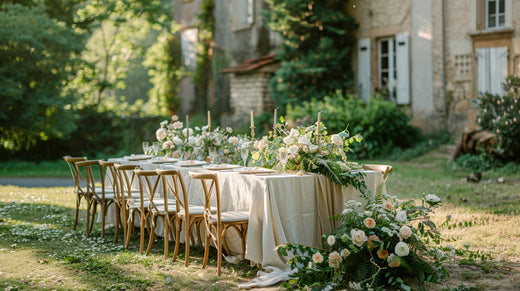
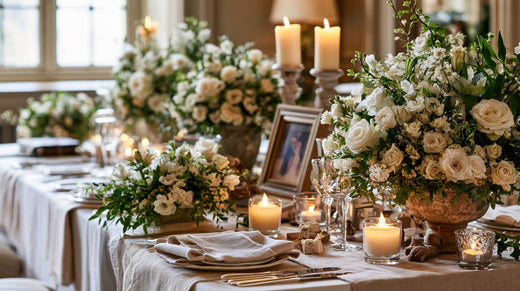
Floral arrangements are one way to achieve this. For example, white flowers with soft greenery complement sage napkins and ivory linens, while cream and peach flowers work nicely with terracotta or champagne table settings.
Simple flower vases can also influence the overall appearance. Clear glass allows the flowers to remain the focus, while ceramic or colored vessels can reinforce the table's existing palette.
Consider the centerpiece's proportions as well. Low arrangements generally make conversation easier across a dining table, while taller designs should leave clear sightlines between seated guests.
For longer tables, several smaller arrangements can create a more balanced appearance than one oversized centerpiece. Leave enough room for plates, glassware, and serving dishes so the decorations remain practical.
Tablecloth, Napkin, and Centerpiece Combinations to Try
Choosing a coordinated table setting becomes easier when you work with a defined color palette. The following combinations demonstrate how tablecloths, napkins, and centerpieces can complement one another without relying on identical colors or excessive decorations.
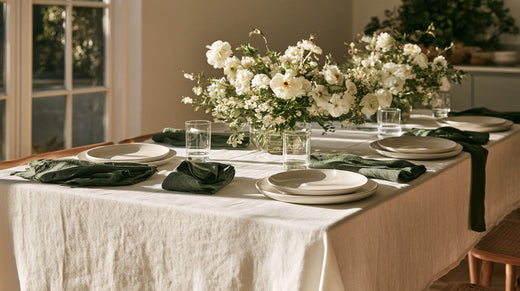
Ivory, Sage Green, and White Florals
An ivory tablecloth provides a soft, neutral foundation, while sage green napkins introduce a natural accent. Complete the arrangement with white flowers and small touches of greenery in clear glass vases.
This combination works particularly well for garden-inspired celebrations, spring gatherings, and relaxed dining settings. Keep the dinnerware neutral to maintain the gentle contrast between the linens and floral centerpiece.
Navy Blue, Champagne, and Gold Accents

For a richer color scheme, pair a navy blue tablecloth with champagne napkins. The lighter napkins create contrast against the darker background, helping individual place settings stand out.
Gold charger plates can add a subtle metallic detail that connects the tableware with the centerpiece. Finish with cream-colored flowers or a simple arrangement featuring warm gold accents.
Keep the metallic details restrained so the navy and champagne combination remains the main visual focus.
Terracotta, Cream, and Natural Greenery

Terracotta tablecloths bring warmth to the dining table, especially when paired with cream napkins and natural greenery. This combination suits autumn gatherings, outdoor celebrations, and casual dinner parties.
A low greenery arrangement can serve as the centerpiece, complemented by neutral-colored candles in simple candle holders.
Choose holders with stable bases and keep any lit candles away from loose greenery and fabric. Flameless candles are another option when open flames aren't suitable.
Common Table Styling Mistakes to Avoid
Even carefully selected decorations can feel disconnected when too many competing elements are combined. Before finalizing your table setting, check for these common mistakes:
-
Using too many colors: Start with two or three coordinating shades rather than introducing a different color for every accessory.
-
Mixing competing patterns: Let one patterned element stand out while keeping the others relatively simple.
-
Choosing oversized centerpieces: Avoid arrangements that block guests' views or interfere with serving dishes.
-
Ignoring contrast: Make sure napkins remain visually distinct from the tablecloth, especially when using similar shades.
-
Overcrowding the table: Leave enough space for dinnerware, glasses, and comfortable dining.
A useful final check is to view the table from a seated position. This helps you judge whether the colors, decorations, and place settings feel balanced from a guest's perspective.
Bring Your Table Setting Together
Matching tablecloths, napkins, and centerpieces is ultimately about creating a consistent look without making every element identical. Begin with a tablecloth that establishes your main color, select napkins that provide complementary contrast, and finish with a centerpiece that repeats or supports those shades.
Whether you prefer soft neutrals, rich colors, or natural textures, keeping the arrangement balanced will make the table feel more coordinated. Small adjustments to color, placement, and proportion can bring the entire setting together while leaving plenty of room for guests to enjoy the occasion.